
「辦桌」英文怎麼說最道地?學會這幾句,向外國友人講出最生動的台灣故事!
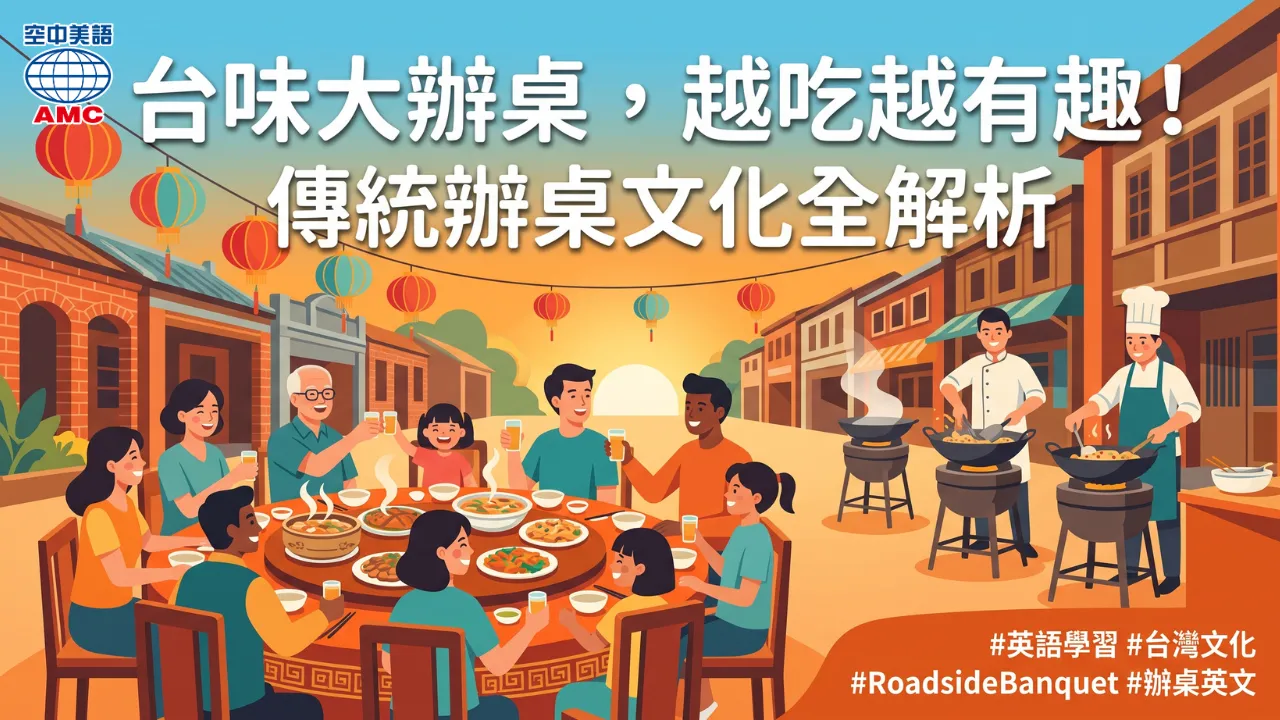
每當要向外國友人或在口說考場上介紹台灣獨特的「辦桌 (Bando)」文化時,你是不是慣性地拿出 "output meal"、"big party" 或是 "traditional wedding dinner" 這些單字來應付?雖然對方大致能聽懂,但這些表達方式太過平面,完全無法傳達出「辦桌」那種深植於台灣在地、充滿人情味與歷史背景的文化底蘊。更嚴重的盲點在於,許多學習者卡在單字量不足(例如不知道「總鋪師」的道地說法),或者不知道如何運用描述性的關係代名詞連結零散資訊,導致整段介紹聽起來支離破碎、缺乏組織力。
要精準輸出辦桌文化,不能只依賴簡單的單字拼湊,而必須學會運用具描述性的關係代名詞(who/which/where)和核心文化術語(如 communal dynamic, historic context),將文化的深度「嵌入」句型中。
從歷史背景解鎖辦桌的英文 DNA
要讓人印象深刻,你的介紹需要層次感。我們可以將辦桌英文的 DNA 拆解為四個維度,不僅是背單字,更要理解單字背後的文化典故。
1. 定義與核心特質 (Definition & Core Attribute)
「辦桌」最直觀的特質就是「路邊」與「大餐」。使用 "roadside banquet" 比 simple banquet 更精準。核心特質在於其「公共性」與「共享性」。
-
Communal dynamic(共用動態/氛圍):描述辦桌時大家圍坐一桌,共享美食的氛圍。
-
Social cohesion(社會凝聚力):強調辦桌活動如何連結社區與鄰里。
Example 1:
Bando is a unique roadside banquet tradition in Taiwan, primarily hosted for large parties such as weddings.
(辦桌是台灣獨特的路邊宴席傳統,主要為婚禮等大型派對而設。)
2. 歷史起點 (Historic Origin)
如教學素材所言,辦桌始於移民社會資源匱乏的年代。這個歷史脈絡(historic context)是介紹的關鍵亮點。
-
Immigrant history(移民歷史)
-
Resource scarcity(資源匱乏)
-
Communal support(社區支持)
Example 2:
Bando started as a form of communal support in the past when Taiwanese immigrants had fewer resources. People prepared food with their neighbors’ help.
(辦桌在過去是作為一種社區支持的形式開始的,當時台灣移民資源較少。人們在鄰居的幫助下準備食物。)
3. 角色與文化術語 (Roles & Cultural Terms)
你一定知道 chief,但介紹「總鋪師」時,chef 並不夠完整。要強調他的「統籌」與「在地智慧」。
-
The head chef (Bando Master / Tsong-phoo-sai):精準定位「總鋪師」。
-
Traditional catering knowledge(傳統餐飲知識):描述總鋪師的專業。
Example 3:
The head chef, often referred to as the Bando Master or Tsong-phoo-sai, talks about what to cook with the host before each banquet.
(主廚,通常被稱為「辦桌大師」或總鋪師,在每場宴席前都會與主人談論要烹煮什麼。)
4. 傳承與現代化 (Heritage & Modernization)
最後,強調其生命力與創新(vitality & innovation),可以讓介紹更有前瞻性。
-
Generational inheritance(世代傳承):描述 Neimen 年輕主廚的努力。
-
Creative adaptation(創造性適應):介紹在草地或船上辦桌的創新。
Example 4:
Now, the culture is protected and has truly been spiced up by younger chefs in Neimen, who infuse new ideas like hosting banquets on grass or boats.
(現在,Neimen 的年輕主廚們保護了這種文化,並通過注入新的想法,如在草地或船上舉辦宴席,真正使其變得有趣。)
實戰延伸與對照:從「單字拼湊」到「流暢敘述」的轉換術
除了核心詞彙,在社交或考試的情境中,你需要更靈活的搭配詞與句型結構。以下對照表格能幫你更精準地掌握用法。
| 教學素材關鍵點 (Key Points from Source) | 常見中式英文 (Common Chinglish / Basic) | 道地實戰搭配詞 (Authentic Collocations / Advanced) |
| 大型派對如婚禮 | big parties like weddings | large parties such as weddings / major life events |
| 在路邊 | right along the road | located along the roadside / set up in outdoor communal spaces |
| 美味一餐 | enjoy a delicious meal | enjoy a flavorful meal / savor local delicacies |
| 移民社會 | immigrants in Taiwan | Taiwanese immigrants / the immigrant society |
| 準備食物 | prepared food | source ingredients and prepare food collectively |
| 變得受歡迎 | became popular | gained popularity / witnessed a surge in popularity |
| 不容易 | was not easy | was a challenging task / required meticulous planning |
| 借用 | borrowed | borrow from neighbors / utilize neighborhood resources |
| 保護文化 | culture is protected | the culture is preserved and revitalized |
| 注入新概念 | put new ideas | infuse new ideas / integrate modern concepts |
| 讓傳統變有趣 | spiced up the tradition | truly spiced up the tradition / reinvented the tradition |
情境溝通與避坑心法:如何零失誤應用關係代名詞進行文化輸出
要讓人印象深刻,你的英文介紹不能只是陳述事實(facts),更需要展現出事實之間的關聯(relationship)。這是口說高分或社交時展現深度溝通能力的關鍵。
避坑心法 1:避免支離破碎的簡單句,靈活運用關係代名詞
不要這樣說(支離破碎):Bando is a big party. It is held on the roadside. It started long ago.
要這樣說(流暢且組織嚴密): 利用關係代名詞 $\textbf{which}$ 或 $\textbf{where}$ 將資訊連結起來。
-
Example A (Using Which): Bando is a traditional roadside banquet in Taiwan, which is a large outdoor meal primarily hosted for major life events, such as weddings.
-
Example B (Using Where): At a Bando, you can see mobile kitchens and tables right along the road, where guests enjoy a flavorful meal.
這樣做不僅更流暢,也向聽者證明你具備整合複雜資訊的能力。
避坑心法 2:強調文化的獨特性,而不只是單純的食物
當提到Neimen時,別只說它是「許多廚師的家」,試著用描述性單字提升語氣。
-
Before: Neimen, Kaohsiung, is the home of many bando chefs.
-
After (More Authentic): Neimen in Kaohsiung is considered the heartland of Bando craftsmanship, producing generations of skilled bando chefs.
利用 heartland, craftsmanship, generations 這些字眼,能更強烈地傳達Neimen在辦桌文化中的特殊地位。
避坑心法 3:掌握口說與社交的靈活開場
在社交場合,不要像背書一樣。可以用一個引人好奇的問題或情境開場。
-
"Have you ever experienced a Bando, Taiwan’s iconic roadside banquet?"
-
"When it comes to unique Taiwanese food culture, you must not miss the Bando, which is more than just a big party."
核心重點複習:精煉條列必記精華要點
-
關鍵術語: 用 "roadside banquet" 定義「辦桌」,用 "communal support" 解釋歷史起點,用 "Bando Master / Tsong-phoo-sai" 精準定位「總鋪師」。
-
核心結構: 靈活運用關係代名詞(which/where)連結資訊,將文化深度嵌入句型。
-
實戰對照: 運用 Markdown 對照表格中的搭配詞(如 savor local delicacies, reinvigorated the tradition)替換簡單詞彙,提升英文道地度。
-
文化輸出心法: 強調文化的獨特性(heartland of craftsmanship)與傳承脈絡(generational inheritance),讓介紹更生動且具歷史感。
推薦閱讀: